


What readers were beginning to see more and more, when illustration was being used, was Decorative art. Chief among the rising stars of this relatively new form of illustration, was John Alcorn (below).
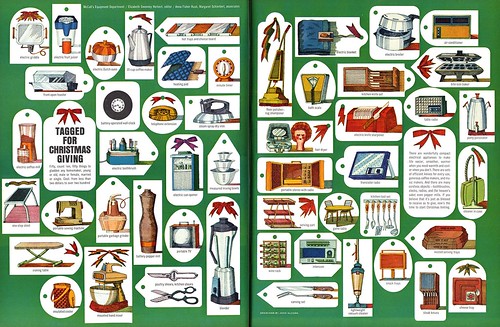
If this fairly early example of the emerging decorative style movement doesn't grab you in a big way, consider that in a few short years it would lead to work like this, and you'll better appreciate how the Decorative style was leading the charge in the shifting taste of popular culture of the time and providing a distict illustrative alternative to photography.
Even more dramatic than AD Otto Storch's inclusion of John Alcorn's work in this issue is the piece below, by one of the greatest decorative artists of the day: Walter Einsel.
"But," you say, "this isn't an illustration... what kinda stunt are you pulling here, Leif?!"
In fact, this piece by Einsel is a revelation - and should be given thoughtful consideration by those of us competing in the shifting sands of today's commercial art market. Walter Einsel accomplished an amazing thing with his design of this "Christmas cake house": he managed to use commonly available store-bought materials to creat a three-dimensional sculpture that accurately reflects his illustration style!
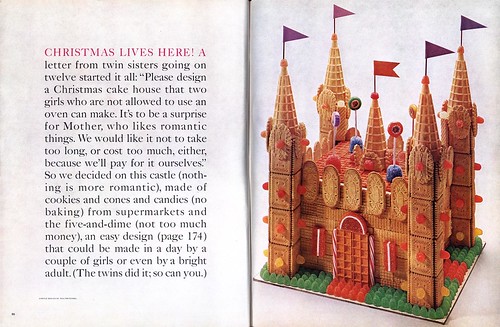
Consider this: if you've read the explanation on the spread's left-hand page, you'll understand the challenge McCall's editors faced in providing a solution to the two girls' request. And in doing so, did they come up with that solution themselves? Did they go to the no doubt very able chefs and consultants in their cooking department? Did they call upon a photographer to provide a solution?
No. The asked an artist.
Post a Comment